

How Many Shots Can a Die-Casting Mold Take? Unpacking Life, Maintenance, and the Tooling Bill
Published: November 10, 2026
Two molds built to the same drawing can lead very different lives. One runs for years; another is cracking, sticking, and going out for repair within a year. Buyers ask a reasonable question—how many shots will this tool take?—and suppliers answer with a range. The range is not the whole answer. Mold life is the product of four things: material, design, operation, and maintenance—a result, not a specification. Break the number down, and it becomes clear what the tooling charge is actually buying. The same logic applies to aluminum die casting and zinc die casting, where die temperature, cycle, and alloy behave differently; life figures are not interchangeable. Whether the supplier is a die caster in Sichuan, Chengdu, or on the coast, the questions are the same.
1. Agree on the Unit First: Shots or Parts
Tool life is normally counted in shots, not parts. A two-cavity mold produces two parts per cycle but only one shot; quoted in parts, the number can look several times better. Ask what the count excludes: trial runs, debugging, and dry cycles usually do not count toward a commitment. Then ask where life ends: at the first heat checking, or when the tool can no longer produce a conforming part? Does life restart after a repair or insert replacement, or accumulate? Without these definitions, “100,000 shots” and “30,000 shots” may describe different questions. Volume and cavitation matter too: a high-cavity tool spreads the same annual output over fewer shots, but each shot carries more metal and more thermal load. A tool quoted at 100,000 shots in a two-cavity mold yields 200,000 parts; the same tool in a four-cavity mold yields 400,000—without a single extra shot of life. A die caster such as Huachuan Die Casting should put the definition, tool ownership, and repair responsibility into the technical agreement; a verbal promise is worth little.
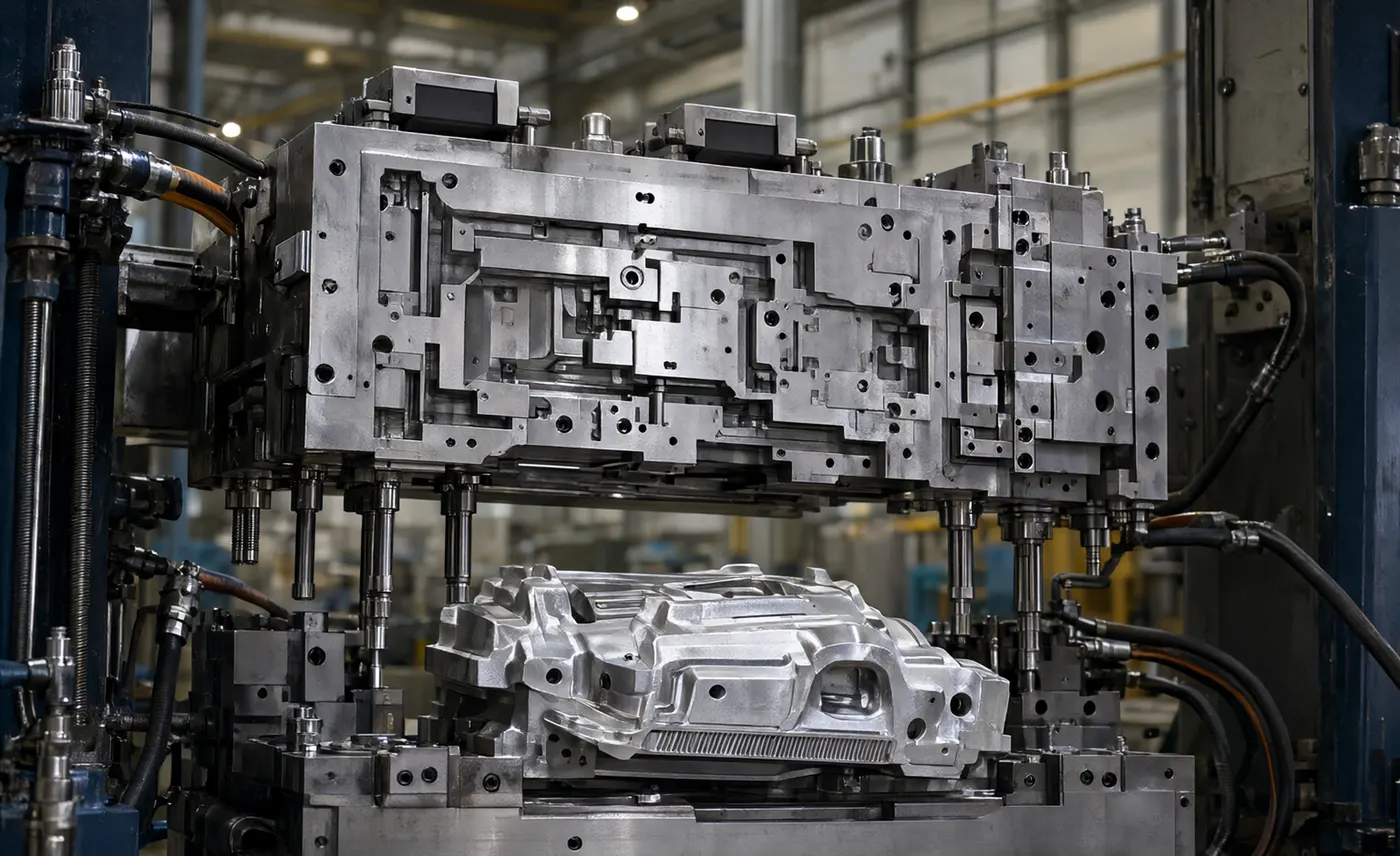
Figure 1 A die-casting mold cavity with slides and ejection structure (illustrative)
2. How Molds Fail: Heat, Not Wear
The most common failure is thermal fatigue cracking. The cavity surface is heated and cooled with every cycle; fine cracks appear near the gate and in thick sections, then grow into cracks. Once heat checking starts at the gate, polishing only slows it; maintenance discipline decides how long the tool remains usable. Erosion is next: molten metal washes the gate and cores at high velocity. Wear and sticking are linked to draft, surface treatment, and release agent. Distortion and cracking often trace back to insufficient structural stiffness, incomplete tempering, or local overheating. Scaling or blocked cooling lines raise local temperature, and heat checking and sticking arrive together. The thermal gradient through the surface is what drives crack initiation; a smooth, stable temperature profile matters more than any single hardness number. Knowing the failure mode tells you which lever to pull.
3. Material and Heat Treatment: Same Grade, Different Life
Common die steels include H13 (4Cr5MoSiV1), 8407, and DIEVAR. The grade is only the starting point. Cleanliness, forging ratio, ESR remelting, the heat-treatment curve, final hardness, nitriding or PVD coating all affect how fast a cavity heat-checks or erodes. ESR steel is cleaner and less anisotropic, which suits large blocks and thick sections. Harder is not automatically better: excessive hardness with insufficient toughness invites early cracking, and incomplete tempering can fail a tool soon after launch. As a general industry range, aluminum die-casting molds often last on the order of tens of thousands of shots; zinc-alloy molds usually last longer. Within the same design, material and heat treatment can still separate two tools by a wide margin. For either aluminum die casting or zinc die casting, the tooling grade and coating should match the alloy and the wall thickness, not a generic checklist. The grade in a quote is a claim; the heat-treatment record is the evidence. Tooling is usually a separate or amortized line in a die-casting quotation, and the premium for better steel is often small next to the cost of an early failure.
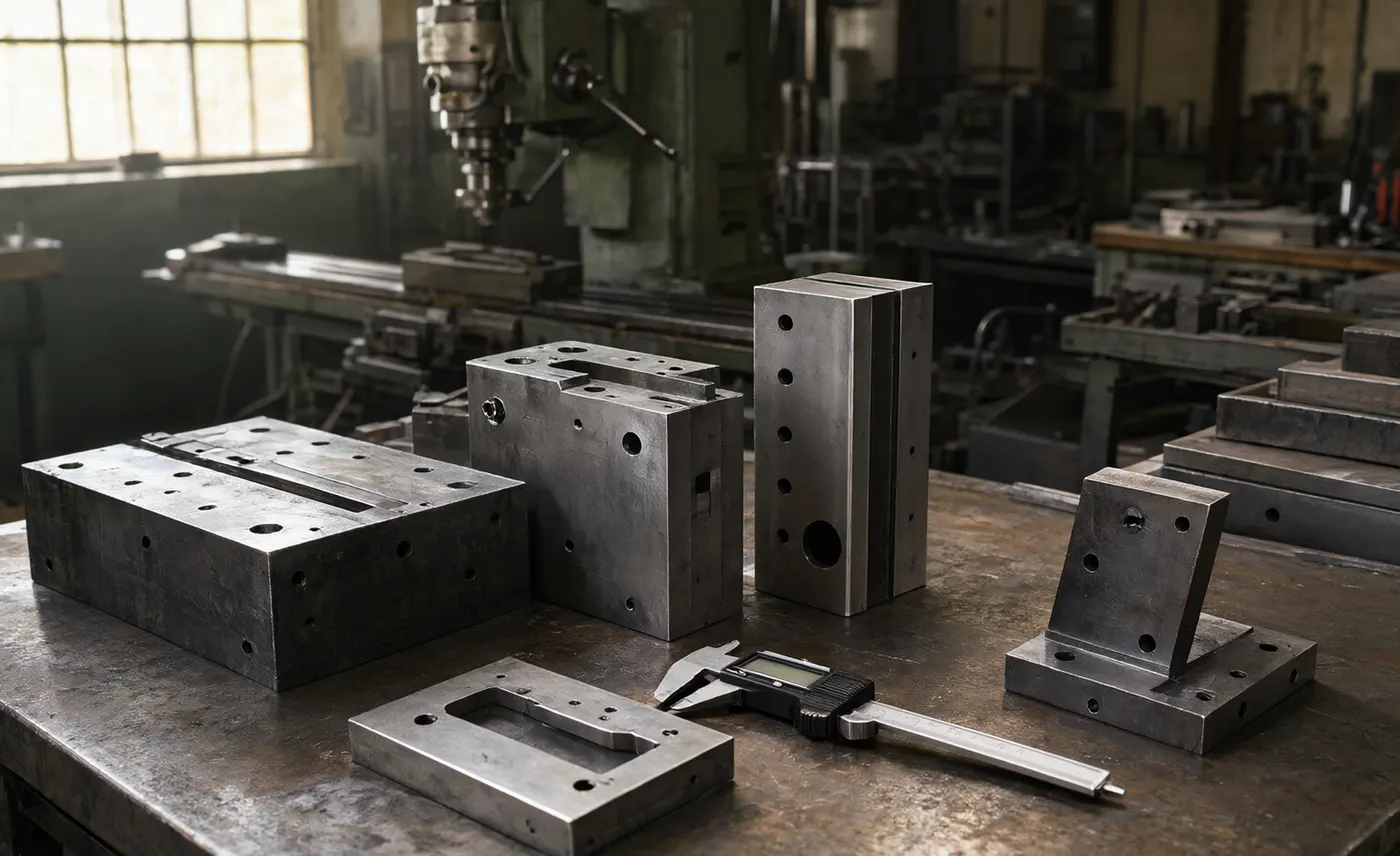
Figure 2 Heat-treated mold steel inserts and spare parts (illustrative)
4. Design Sets the Ceiling: Gating, Cooling, Venting, Structure
The upper limit of die-casting mold life is set at the design stage. Gate location and fill velocity decide where the cavity is washed. Cooling lines too far from the cavity leave hot spots; too close can raise local stress. Poor venting traps gas and brings sticking and porosity. Sharp corners and sudden wall-thickness changes concentrate stress. Slides, cores, and ejection systems without enough stiffness distort over time. Runner and overflow layout also changes the thermal load on the cavity, not just the metal yield. Conformal cooling can even out temperature, but a poorly designed circuit can add stress rather than remove it. Vent depth and location also depend on the alloy and part geometry. A mold design is not finished when the cavity is drawn; thermal balance and structural load are the core.
5. Operation Sets the Floor: Preheat, Die Temperature, Release Agent, Cycle
The same tool can live longer or shorter in different hands. Starting on a cold die shocks the surface with heat; die temperature that swings up and down accelerates heat checking; too much release agent or too high a concentration may help ejection but leaves buildup and sticking; unstable cycles and stops without temperature control also consume tool life. Preheat with a die-temperature controller or cartridge heaters before the first shot, and hold temperature during stops; it is far cheaper than repair. Different alloys run in different temperature windows, so one set of parameters should not be applied to all. Record the settings that work, and keep them with the tool. Cooling-water flow and quality belong here too: a restricted line or scaled channel creates the same hot spot as a bad design. Preheat, stable die temperature, correct release agent, and a consistent cycle are the cheapest life extenders—and the easiest to neglect.
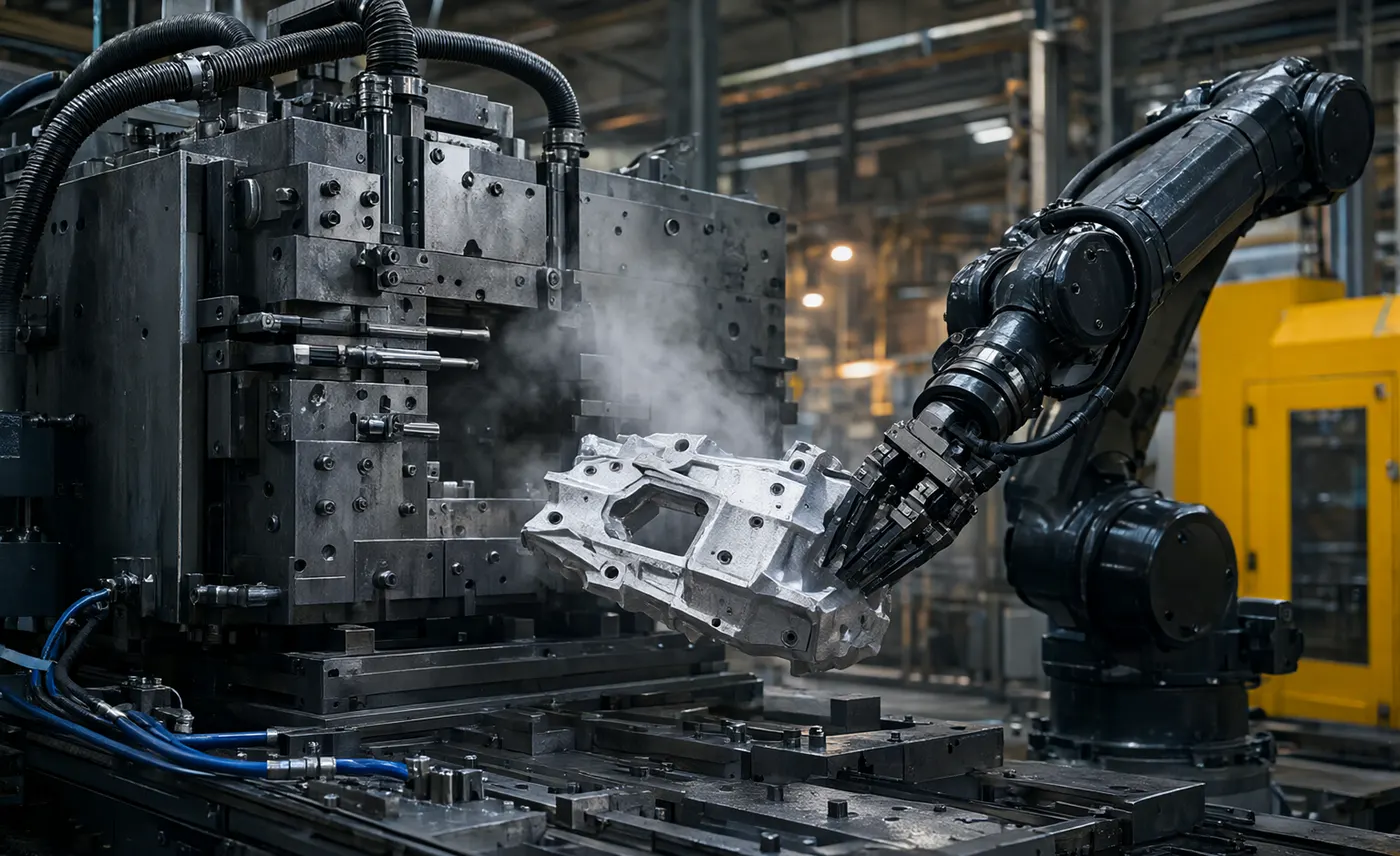
Figure 3 A die-casting mold in production with automatic part removal (illustrative)
6. Maintenance Decides the Balance: Inspection, Cleaning, Stress Relief, Repair
Mold life is not simply consumed until failure; maintenance earns part of it back. Check water lines, vents, ejector pins, and slides every shift. Clean cooling channels on a schedule so scale does not drag die temperature down. Repair fine cracks by welding or polishing early, before they grow. Schedule stress-relief tempering by shot count or calendar time, and replace worn inserts and pins. Keep safety stock of consumable parts and a repair plan; waiting until production stops to look for a spare usually costs more than the spare. Keep a tool history with the tool: shots run, repairs made, parts replaced. Track cost per shot over the tool's life; it turns maintenance from a cost center into a number you can compare. At a die caster such as Huachuan Die Casting, that record is more reliable than anyone's memory.
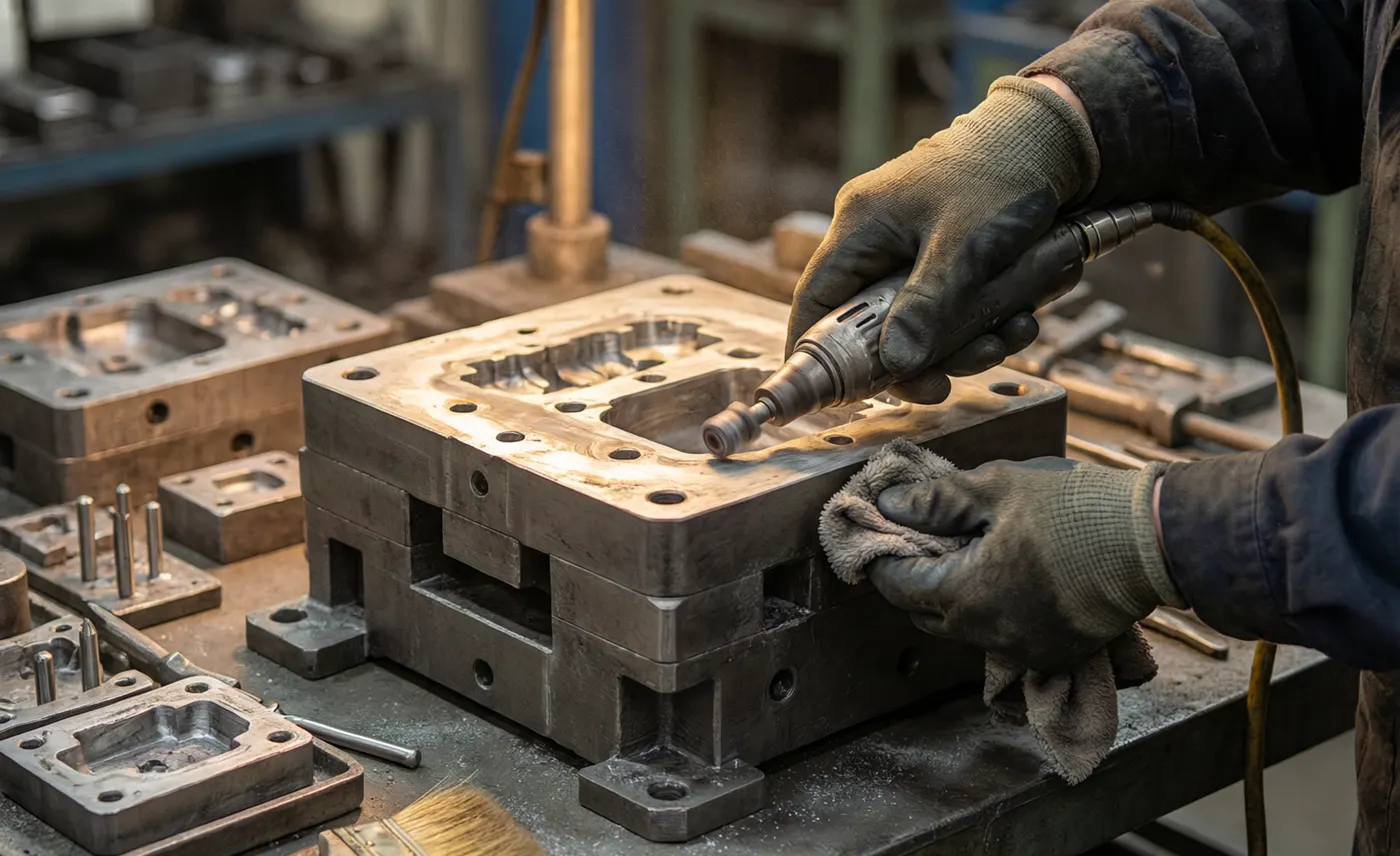
Figure 4 Mold maintenance: cleaning and polishing the cavity (illustrative)
7. Purchasing: Put Tooling Cost Back into the Lifecycle
Lower tooling cost is not automatically better. Two quotes may differ by tens of thousands of yuan; if the more expensive tool lasts longer, needs fewer repairs, and keeps production running, it can be cheaper per part. Compare the full bill: tooling price, repairs, spare parts, downtime, and the risk of a changeover or line stop. Listing tooling, repair, and spares separately makes comparison easier than one lump sum. A low price with expensive spares and slow repairs usually comes back as cost later. Ask about material and heat treatment, whether life is committed in shots or parts, who owns the tool, how repairs are charged, spare-part lead time, and whether peak capacity can be met. Ask for spare-part prices and repair lead times with the original quote, not after the first breakdown. Calculate cost per shot, not just cost per kilogram of tool steel. For a die caster such as Huachuan Die Casting, a responsible tooling quote should show the customer where the money goes.
Mold life is not a number printed on a quote. It is the result of design, manufacturing, operation, and maintenance working together. Agree on the definition, keep up the maintenance, and the tooling bill will be money well spent.