
Same Drawing, Twice the Quote: Unpacking a Die-Casting Quotation
Published: November 5, 2026
The same drawing sent to three die casters can come back with quotes that differ by 30 percent, 50 percent, or even double. The first reaction of many buyers is to ask who is overcharging and who is buying the order with a lowball price. Do not jump to conclusions. A die-casting quotation is not a list price for a standard product; it is the result of a set of assumptions: the volume over which tooling is amortized, the weight used for material, the delivery stage, and the acceptance standard. Different assumptions produce different prices. Level the basis and much of the gap disappears; what remains is the cost difference genuinely worth comparing. Whether you are dealing with a die-casting plant in Sichuan or Chengdu or with a supplier on the coast, the same breakdown applies.
1. The “Unit Price” on a Quotation Is Not the Same Thing
Start with a simplified example. Quote A is 100, B is 150, and C is 220. A looks cheapest, but A may cover the raw casting only, with no tooling amortization and no tax; B includes tooling amortization and tax; C also includes secondary operations, 100 percent inspection, and leak testing. Add the items A left out at the same annual volume, and A’s basis moves to roughly 180. The original two-to-one gap narrows to about 20 percent. This is not A playing word games; the three quotes simply answer different questions. Before comparing, align the basis: annual volume and lot sizes, whether tooling is a separate line or amortized, raw casting versus finished part, tax and freight, how much inspection, payment terms, and who owns the tooling. The more specific the RFQ that a die caster such as Huachuan Die Casting receives, the easier the quote is to settle: material, tooling, secondary operations, and inspection, item by item, rather than a vague “how much per piece?”
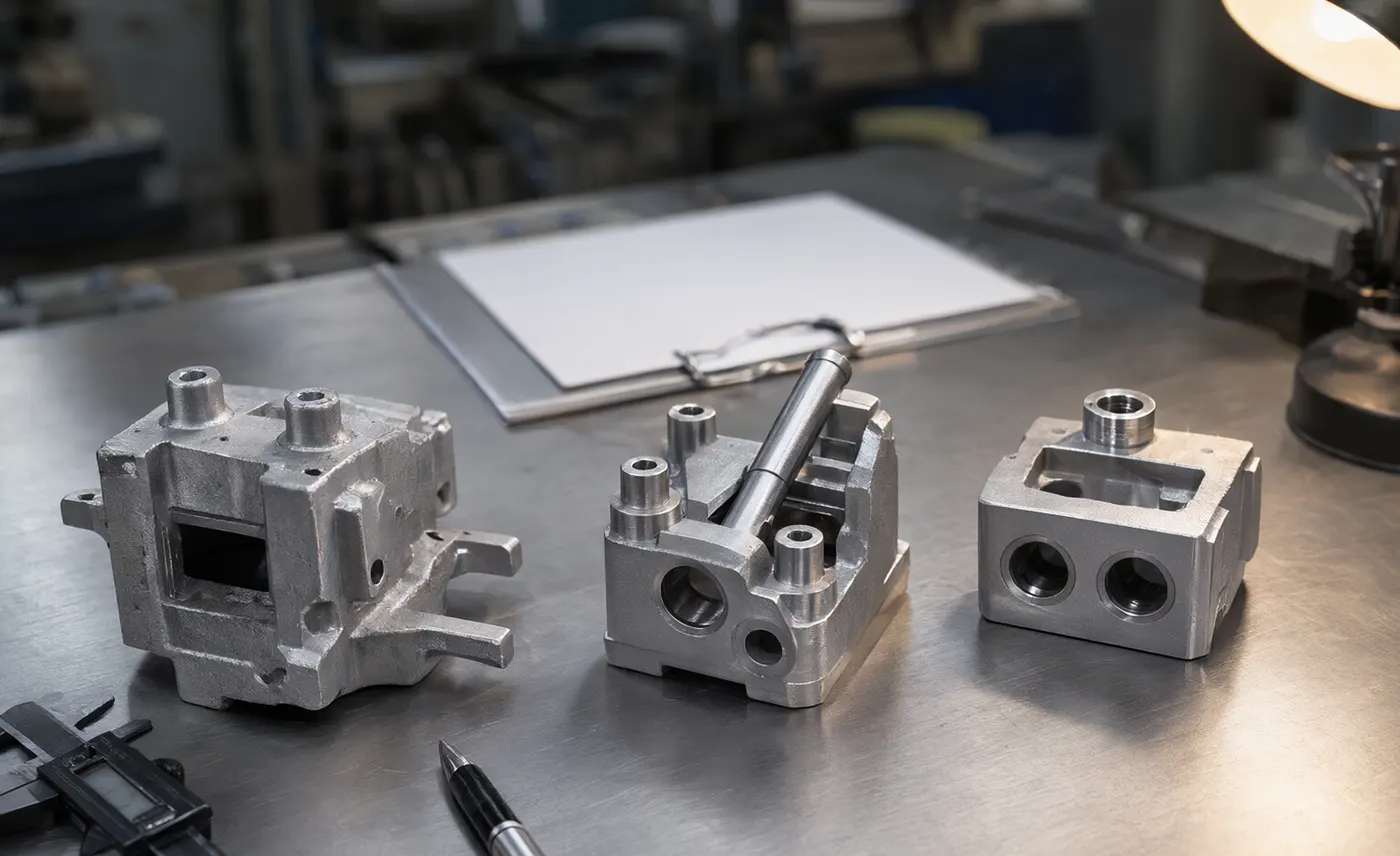
Figure 1 A quotation, measuring tools, and die-cast parts: the cost items behind a unit price (illustrative)
2. Material Cost Follows Casting Weight, Not Part Weight
Material cost in die casting is usually not part weight multiplied by alloy price. Every shot contains, besides the part itself, the runner system, overflow wells, and flash; these are trimmed off after casting and remelted. The ratio of part net weight to the metal poured per shot is the casting yield. It varies with part geometry and with runner and overflow design. A quotation that estimates material from net weight alone must either add cost later or recover it somewhere else. Returns are not credited at the full new-metal price either: melting loses metal to oxidation, and refining, degassing, and composition adjustment all cost money; the allowable share of returns is also limited by quality requirements. Under the same heading of aluminum die casting, ADC12, A380, and the various zinc alloys differ in charge mix, composition control, and price. Whether the quote states the alloy grade and includes a material-price adjustment clause affects the real cost of the lot.
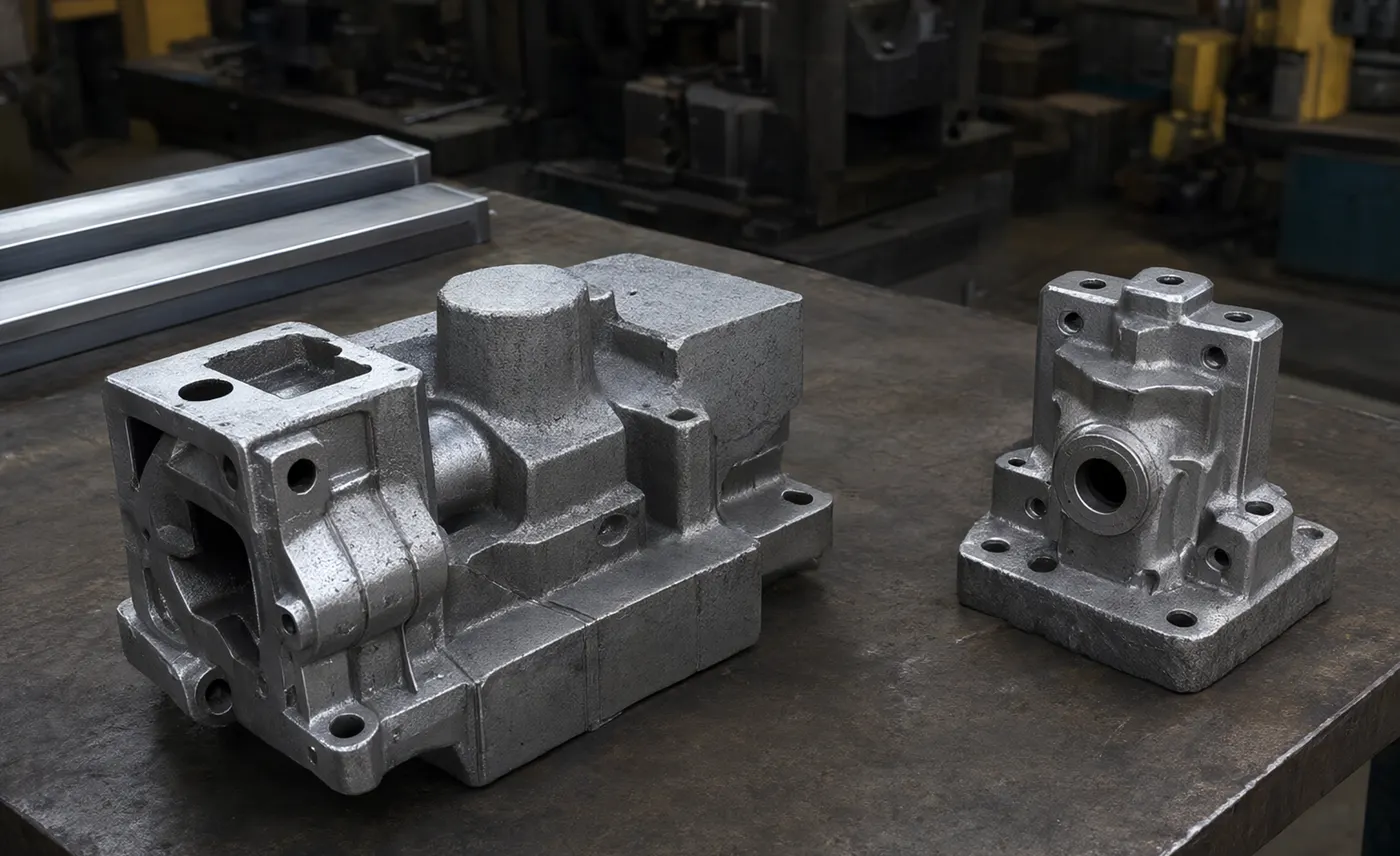
Figure 2 A raw die casting with runner system and overflow, beside a trimmed part (illustrative)
3. Tooling: The Line Item “Cheap” Often Hides
Tooling is commonly quoted in three ways: a one-time separate charge, amortization into the piece price, or an upfront charge recovered against cumulative volume. They cannot be compared directly. The tool itself also differs: cavity and core material, the level of heat treatment and surface treatment, the number of cavities, whether slides and cores are included, and whether trial runs and spare parts are part of the price. Aluminum die-casting dies commonly last on the order of tens of thousands of shots; zinc-alloy dies usually last longer. The actual number depends on die material, design, maintenance, and operating conditions. A low tooling price is not necessarily a concession; it may reflect a discount in die life, spare parts, or maintenance standard. At high annual volume, cavity count and die life directly dilute the piece price; at low volume, tooling amortization is itself the largest part of the quote. Who owns the tooling, and how repair and replacement are charged, should also be settled at the quotation stage.
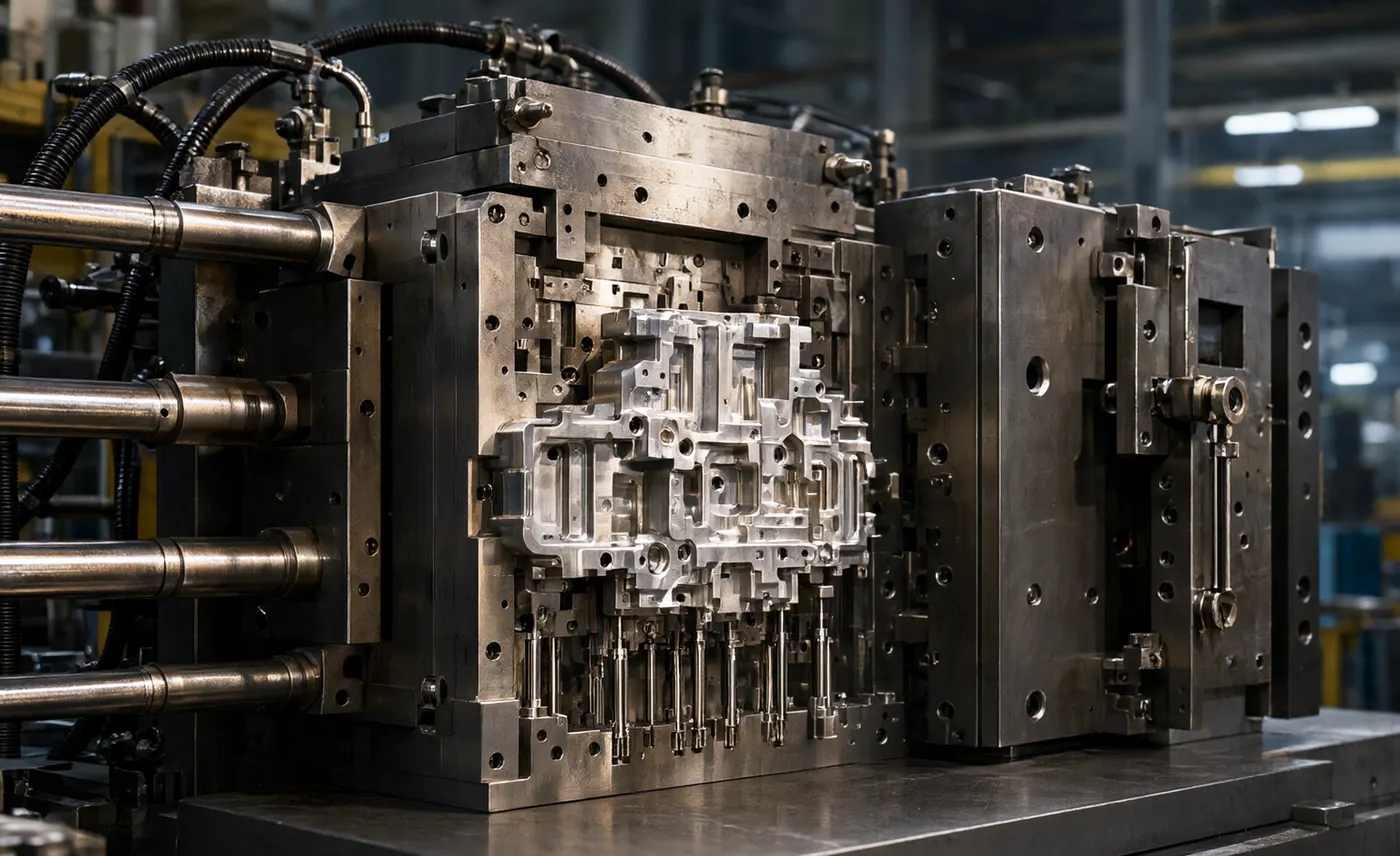
Figure 3 Cavity, slides, and ejection structure of a die-casting mold (illustrative)
4. Processing and Secondary Operations: Different Delivery States Are Not Comparable
The die-casting conversion charge is not simply the price of “pressing” a part. It depends on machine tonnage, cycle time, yield, labor, energy, and equipment depreciation. A large machine running a small part, a slow cycle, or a low yield all push the piece price up. Secondary operations cover a wider scope: degating, grinding, shot blasting, machining, tapping, surface treatment, impregnation, leak testing, and packaging. Which of these are done in-house and which are outsourced may be collapsed into a single line called “secondary operations.” Inspection works the same way: sampling or 100 percent inspection, X-ray, CMM, and leak testing make a large difference in cost. When one quote delivers a raw casting and another a finished part, one includes tax and freight and the other does not, comparing unit prices is meaningless.
5. Yield and Acceptance Criteria: The Most Hidden Gap
A quotation usually contains an implicit yield assumption. Yield during trial production, yield in stable mass production, who bears scrap, and how rework and sorting are charged all feed into the piece price. Some quotes assume high yield and a low inspection rate; they look cheap but leave the quality risk with the customer. Acceptance criteria are also a premise of the quote. Aluminum die castings can refer to GB/T 15114-2023 and zinc-alloy die castings to GB/T 13821-2023; dimensional tolerances can be agreed by CT grade under GB/T 6414-2017; internal defects can be graded by radiography under GB/T 11346-2018. Standards give a common floor. Which locations may contain defects, to what extent, and how they are verified still belong in the technical agreement. In the review process at a die caster such as Huachuan Die Casting, acceptance criteria should be a precondition of the quotation, not an annex added after the contract is signed.
6. A Supplier’s Cost Structure Decides Whether a Low Price Lasts
Similar prices can rest on very different cost structures: whether machining and surface treatment are in-house, whether order books are full, purchasing scale for alloy, distance to the customer, and payment terms. A low price can come from efficiency, specialization, or spare capacity, or from skipped operations, relaxed standards, a lighter tool, downgraded material, or risks deferred until after mass production begins. Payment terms are especially easy to overlook: a quote at 60 or 90 days and a quote at cash on delivery are not on the same sheet. When comparing, make “why are you cheaper?” specific: which operations do you perform in-house, where do you have a material advantage, how many shots is die life based on, and what yield did you assume? Clear answers make a low price sustainable; vague ones usually mean the cost has simply been moved downstream.
7. How Buyers Should Compare: Put Every Quote on the Same Sheet
Four steps. First, align the basis: annual volume and lot size, alloy grade, delivery state, tooling cost and ownership, tax and freight, inspection standard, yield and scrap responsibility, and payment terms. Second, break down cost: material, tooling amortization, casting conversion, secondary operations, inspection and packaging, overhead and margin. At minimum, ask the supplier to separate the major blocks. Third, calculate total cost: unit price times quantity, plus tooling, logistics, quality risk, and the cost of switching suppliers, rather than the unit price alone. Fourth, validate through trial production: first-article approval, a small-lot run, process capability, and change notification, checking each assumption in the quote. Questions worth asking include: how long is the quote valid, how does material pricing adjust, how many shots is die life rated for, who owns the tooling, how is scrap accounted for, what data does the inspection report contain, how much notice is given for process changes, and can peak capacity be met. For a die caster such as Huachuan Die Casting, a quotation that stands up to comparison should let the customer see where the money goes.
If you do only one thing, put annual volume, delivery state, acceptance criteria, and tooling ownership into the RFQ. Without these four, suppliers can only guess; with them, quotes become comparable. The numbers on a quotation can be negotiated, provided both sides agree on the same set of assumptions.
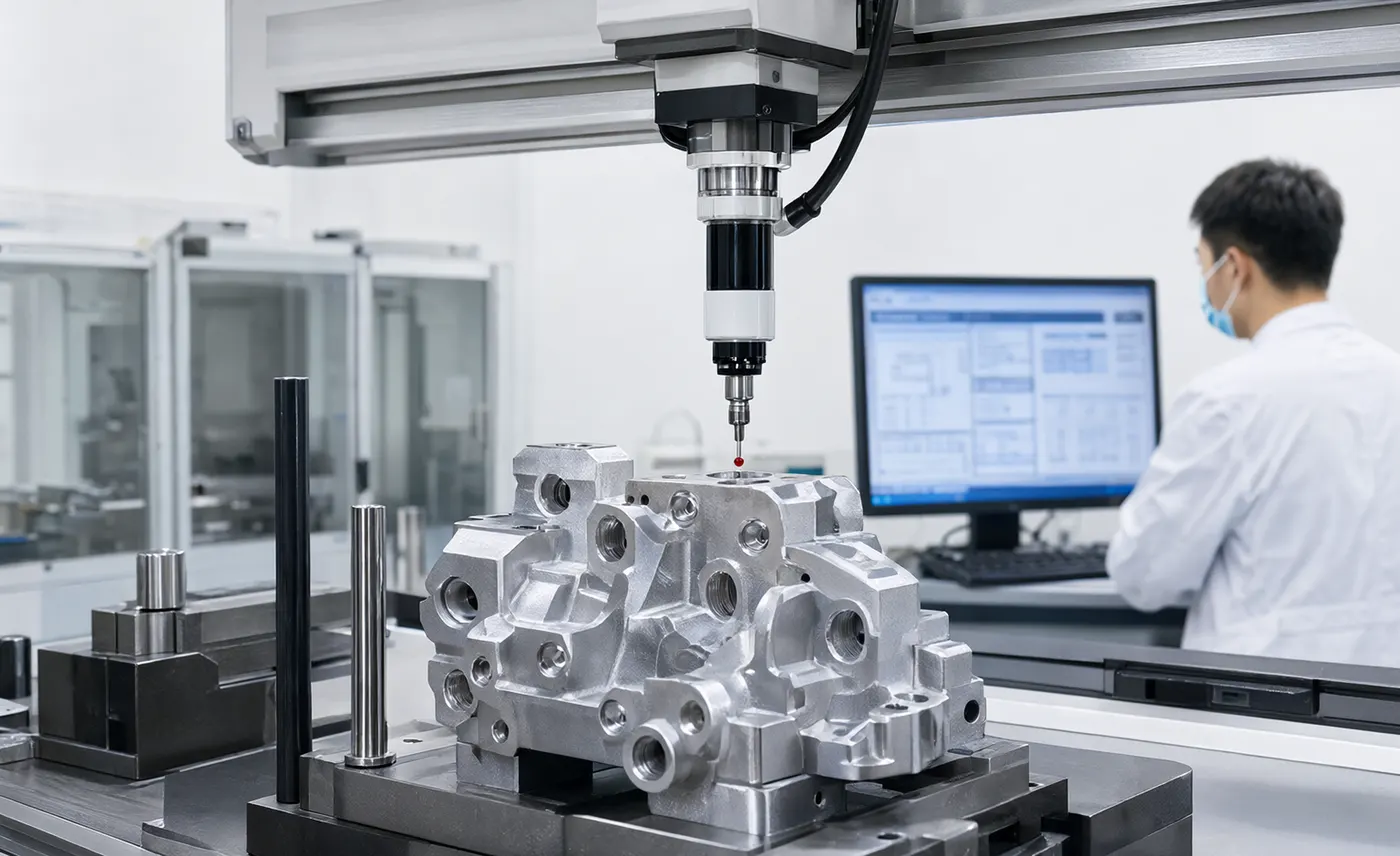
Figure 4 CMM dimensional inspection of a die casting (illustrative)
A quote that is twice the price raises a better question than “who is cheapest”: what does the difference buy, and what has been left out? Level the basis, count the total cost, and verify early, and a low price will not turn into a high price at mass production.
Contact
- Mobile / WeChat: +86 199 8304 0872
- Landline: +86 28-8712 5500
- Email: huachuanyazhu@hcyz.email
Address
- Group 7, No. 55, Shuangbai Village, Puyang Subdistrict, Dujiangyan, Chengdu, Sichuan, China
WeCom